Everything about Waterproofing
Flying in snow or rain without waterproofing is a risky endeavor for drones. If moisture gets onto active electronics, glitches such as sudden motor failure or loss of connection are likely (and in most cases, occur). Falling into salt water (the sea) leads to oxidation and circuit damage.
What should be covered with sealant?
For maximum protection, you need to cover all the legs of electronic board elements. If the legs are under the housing, you should apply sealant around the perimeter of the housing. It is not necessary to apply it to the black bodies of the elements themselves, but for capacitors and resistors, sealant should be applied over the elements, preferably in a thicker layer, as part of the sealant may run off, leaving a poorly coated surface. You should pay attention to the barometer; if one is present and you plan to use it, under no circumstances should you let anything get into its opening. You can cover the barometer housing with tape before applying the sealant. Additionally, do not allow sealant to get into the microSD card slot or USB connector; you should insert plugs before application. The contacts of connectors can be covered from the inside with plugs to prevent sealant entry, or sealed over if you are sure you won't use them. It is recommended to apply sealant at the base of the silicone insulation of the connector wires to prevent moisture from entering the connectors.
Components like air units and transmitters with screens can be coated around the perimeter of the heatsink/shield, or disassembled and coated according to the advice above. If you are unsure about disassembly, it's better not to risk it and only coat the perimeter; this should handle accidental moisture from grass or rain.
It is also recommended to cover contacts with sealant after soldering.
What are the options for waterproofing electronics?
As of 2024, the following options are relevant:
- Kotking
- Silicone Glue 705
- B-7000 Glue
- FX FPV AeroX V2 Silicone Sealant
- FX FPV Aero WARP Silicone Varnish
- FX FPV Aero Light Silicone Varnish
- DCA Electrolube
- Spinner Protection Silicone Conformal Coating V2 ("Spinner Liquid")
- Chinese IP65 Silicone Circuit Protection
A bit about each of them:
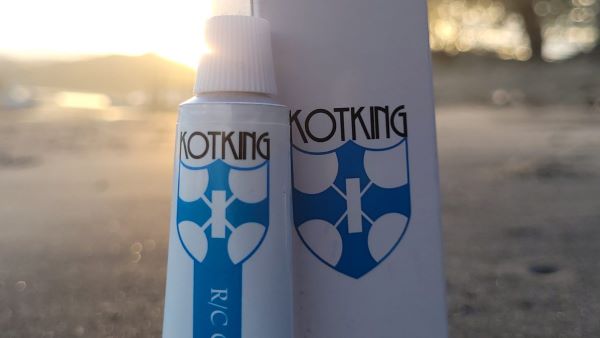
KOTKING, if unavailable here, look on Team BlackSheep or market boards
Silicone. Kotking was a premium product for a long time, sold mainly abroad, and the price was always higher than analogues. It has become more accessible now thanks to some stores, though the price is still slightly higher than some alternatives. It comes in a small tube with liquid silicone inside. One tube is enough to cover 3-4 drones (electronics) with a moderate layer. It is applied from the tube as a relatively thick drop and spread with a stick over the entire area, or squeezed through an additional nozzle with a narrow opening (remember to clean it or wrap it tightly afterward so it can be reused). According to the instructions, it should set in 15-20 minutes, but personal experience has varied; sometimes it was very liquid and took 12-16 hours to set, and over a day to fully cure. Yet, even the liquid version stored well for 2-3 months on a shelf without losing its properties. There is an unpleasant odor until it dries. The coating is quite reliable, as demonstrated by videos of drones working perfectly underwater. However, practice has shown that after 24-48 hours in a body of water, some electronics still fail; unfortunately, there are no 100% guarantees. If not manually disturbed, it remains as a solid layer and protects boards excellently. It is impossible to solder through the applied layer. Removing it isn't particularly convenient; you can't just peel the whole layer off; it comes off in pieces. It is not soluble in acetone. Presumably, most of it can be removed using Solvent 646 and a brush, but like any other silicone, it will remain between the legs of components, which usually bothers electronics repair technicians. One significant downside: with long-term storage (several months), it can cure inside the tube, though it still stores better in its packaging than alternatives in varnish-like tubes. In summary:
Relatively reliable moisture protection
The layer is not damaged without external influence
Can be hard to find in Russia
Expensive ($12 for 15ml)
Complaints that it can cure even in sealed form during long storage
One tube covers 3-4 drones at most
Unpleasant odor before drying
Hard to clean off the board
Cannot solder through the layer; must be scraped off for repairs
Glue 705, buy it here
Silicone. Although described as a glue, it performs well as a sealant. Also found as K-705. Applied as a thick drop from the tube and spread with a stick, or through a fine nozzle. Sets in 20-30 minutes if not applied too thickly. Properties are similar to Kotking. Practically odorless. Summary:
Cheap (under 300 RUB for a 45g tube)
Widely available
Relatively reliable moisture protection
Practically no smell
Fast drying with a moderate layer
The layer is not damaged without external influence
Not soluble in acetone; soaking in gasoline for 10-15 minutes might help
Cannot solder through the layer; must be scraped off for repairs

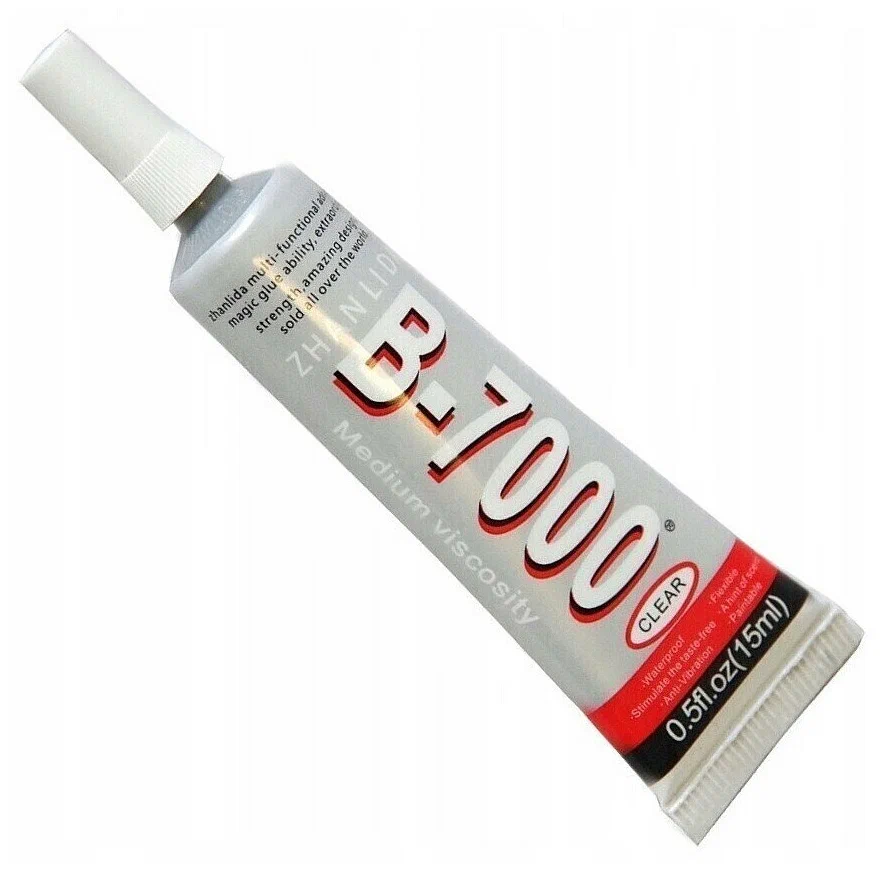
B-7000 Glue, buy it here
Despite being a glue, B-7000 also excels at waterproofing and is resistant to temperatures reached by electronics during idle time. It's cheap, available in various tube sizes, and sold in many places. However, there are many manufacturers (some counted at least 15), and the consistency can vary slightly. Good versions are liquid enough to apply easily, and the layer is transparent and cures without air bubbles (clean the board before application). If yours is very viscous/yellowish, it's either been stored too long or is from a poor batch. Sets in 15-30 minutes; full curing takes several hours. You can solder through it, but it's not pleasant due to the terrible smell. If you have a good version, it can be removed by picking at an edge and winding it onto tweezers. If you're unlucky with the manufacturer, it only comes off after soaking in acetone for 10 minutes or by winding it after heating, but there's a risk of pulling off SMD components. After coating with B-7000 and drying, it's recommended to wipe the coating with alcohol. This makes the surface slightly matte and stops it from being sticky (so it won't collect debris). Many repair technicians prefer this sealant because it protects well and can be removed from entire sections of the board. Alternatives like T-7000, E-6000, and E-8000 have similar characteristics but different colors. Summary:
Cheap (under 200 RUB for up to 50ml)
Widely available
Easy to apply
Reliable moisture protection
Fast drying
Occasional "bad" batches
Pungent smell when soldering through it
Risk of pulling off SMD components during removal
FX FPV AeroX V2 Silicone Sealant, buy it here
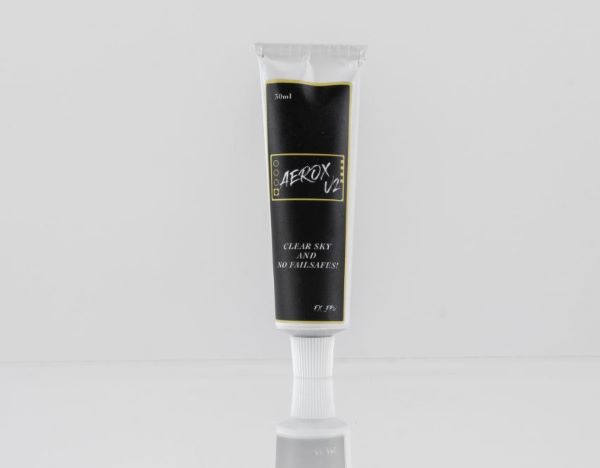
Silicone. Reminiscent of its first version (see the Legacy section), but with a different tube and slightly modified formula; the problem of curing inside the tube during storage has been addressed (though it can still cure if stored for a very long time or left open). Available in 20 and 30ml in transparent and black (FX FPV AeroX Black); properties are identical. Pleasant smell. Sets in 20 minutes. Transparent layer with no bubbles. Cannot solder through it. One removal method is soaking in Aero Remover. Detailed review here. Summary:
Easy application
Pleasant smell
Fast drying (20 min)
Durable layer
Relatively reliable protection
Cannot solder through it
Expensive (~850 RUB per tube)
Only available in Russia
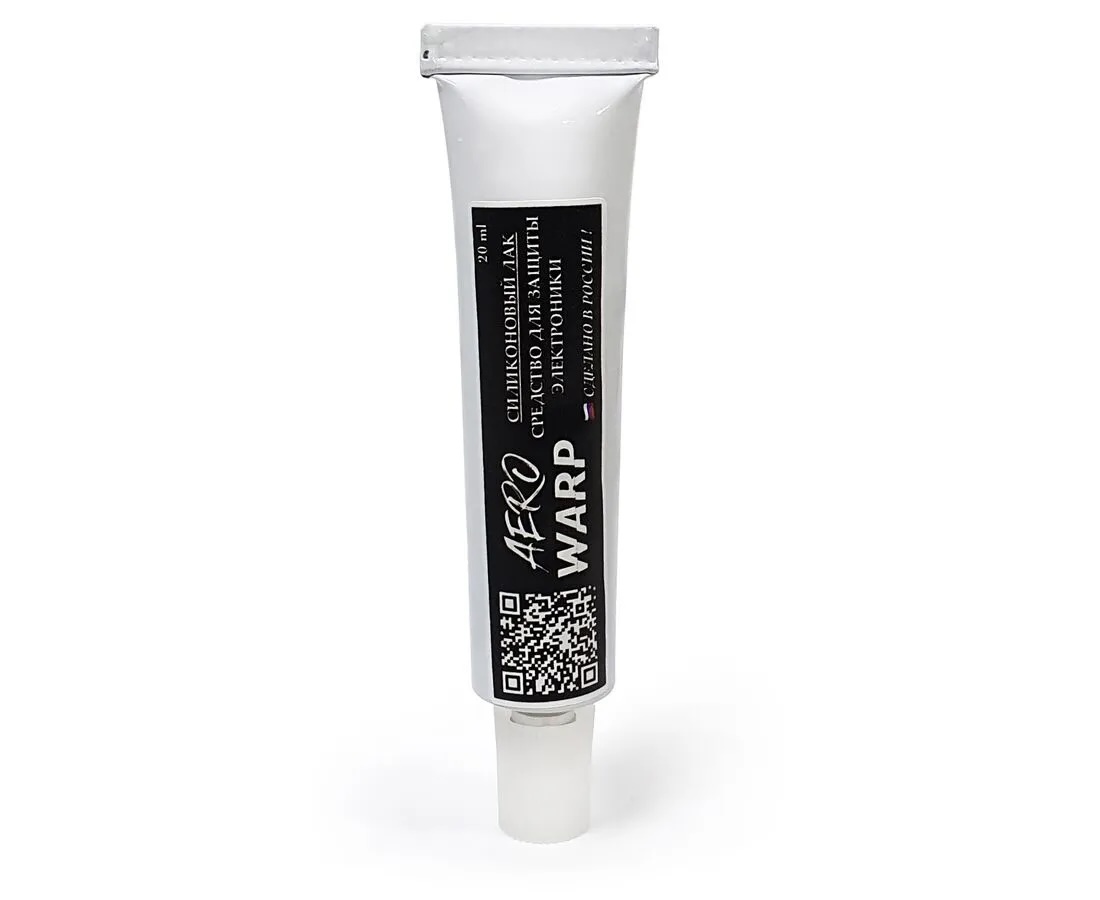
FX FPV Aero WARP Silicone Varnish, buy it here
Silicone varnish. No toxic smell. Comes in a tube, which allows for long storage life. Sets in 20 minutes. The cured layer is viscous and doesn't crack. You can solder through the cured layer. Similar to the Chinese IP65 circuit protection. One removal method is soaking in Aero Remover. Detailed review here. Summary:
Mid-range price (~600 RUB per tube)
Can solder through it
Doesn't crack
Acceptable smell
Fast drying (20 min)
Relatively reliable protection
Only available in Russia
FX FPV Aero Light Silicone Varnish, buy it here
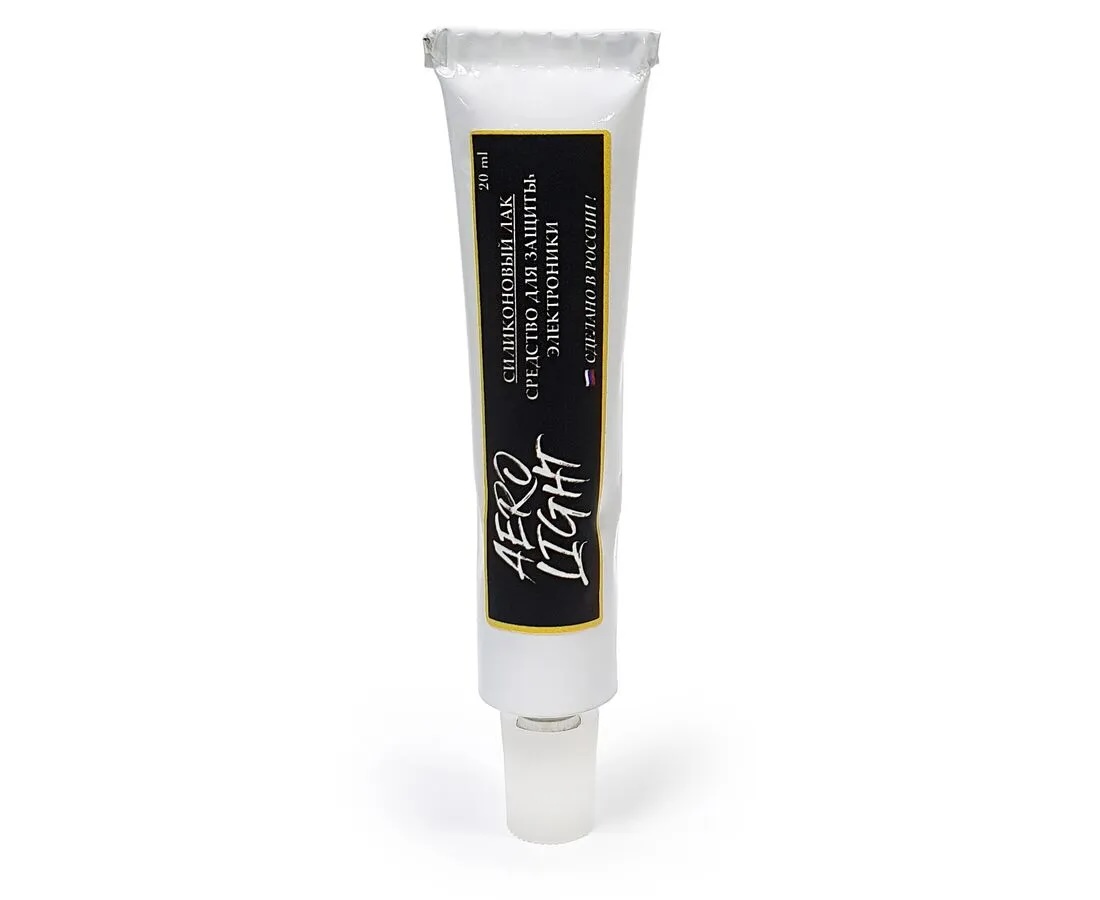
Silicone varnish. Has a slight chemical smell but with added fragrance. The fragrance remains after the layer cures. Comes in a tube for long shelf life (previously sold in jars with brushes, where users complained about it drying out). Sets in 15-20 minutes. The cured layer is viscous and doesn't crack. You can solder through it. Similar to Chinese IP65 circuit protection. One removal method is soaking in Aero Remover. Detailed review here. Summary:
Mid-range price (~650 RUB per tube)
Can solder through it
Doesn't crack
Pleasant smell
Fast drying (15-20 min)
Relatively reliable protection
Only available in Russia
DCA Electrolube, buy it here
Varnish. Sold in a convenient tube with a brush. Similar to 422C (see Legacy): liquid, dries in 30+ minutes, slightly viscous when cured. Can peel off after cooling. Generally fewer positive reviews than the alternatives above.
Mid-range price (550 RUB for 25ml)
Easy application
Long drying time
Does not guarantee 100% protection
Spinner Protection Silicone Conformal Coating V2 ("Spinner Liquid V2"), buy it here
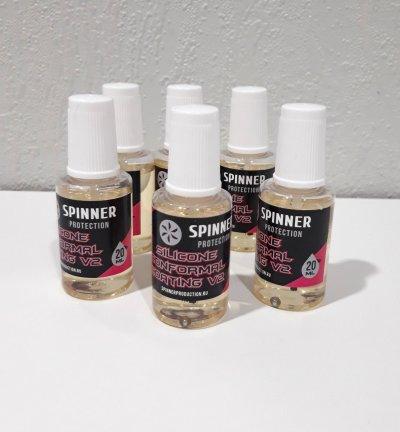
Varnish. Many might assume it's DCA or 422C, but it has a different formula (according to the seller). I haven't personally tested it (if you have experience, please supplement the article). Costs 600 RUB for 20ml. Reviews suggest behavior similar to 422C—long drying time and imperfect protection.
Chinese IP65 Circuit Protection
Varnish. Similar to 422B but more viscous. Also has a pungent smell. Sets in 15 minutes; for full drying, it's better to wait a day, as with other varnishes. One layer is sufficient. You can solder through it, and it can be cleaned off with a brush and acetone. In my personal experience, it hasn't failed or cracked yet. Better not to leave the tube open as it thickens. The volume will last a very long time; it will dry out before you use it all unless you decant it into smaller tubes. Summary:
- Cheap ($8 for 100ml)
- More trustworthy than alternatives like 422C, DCA, or Spinner V2
- Easily cleaned off
- Fast drying
- Good adhesion
- Can solder through it
- Not the most accessible option (AliExpress only)
- Pungent smell
Liquid Electrical Tape
Another option mentioned, though not very popular, is liquid electrical tape. Degrease the electronics with alcohol, dry, and apply a layer. It dries in 15-20 minutes. It peels off in one layer like tape. A 500ml spray costs up to 900 RUB. If you have experience using this, please supplement the article.
Legacy:
Plastik-71, buy it here
Varnish. Plastik-71 initially gained popularity as the most accessible option available in every electronics shop, but it's a poor choice because it cracks quickly under use, letting moisture in. Multiple layers can be applied to increase longevity, but there are no real guarantees. Some believe quality varies by manufacturer, with a few positive reviews, but they are rare. Summary:
Cheap (under 200 RUB for up to 100ml)
Widely available
Does not guarantee waterproofing as it cracks over time.
Not recommended by hobbyists.
MG Chemicals 422B, discontinued
Varnish. For a long time, it was relatively accessible, sold in small jars at ChipDip and in 20-25ml tubes by Spinner Production and Air-Hobby (under the names "Spinner Liquid" or later "Air-Hobby 422B"). It was a compromise, costing around 300-400 RUB for 20ml (enough for a year of active use). Set in 10 minutes, cured in 15, though 24 hours at room temperature was recommended for full drying. One layer was sufficient for protection, but at low temperatures (winter flying), it would start to crack and let moisture in. Production stopped in 2021; it is no longer available. The 422C version became the alternative.
MG Chemicals 422C, phasing out
Varnish. There are many mixed reviews; I haven't personally tried it. Presumably similar to 422B but more liquid and takes longer to dry (30-40 minutes per layer). For a while, it was sold under the same names as 422B, but it is now gradually disappearing from stores. Summary:
Mid-range price (around 700 RUB for 20ml in 2022)
Can solder through it
Easily removed with a brush and alcohol or acetone
Becoming hard to find in Russia
Long drying time
Does not guarantee 100% protection
FX FPV AeroX, discontinued
Silicone. Odorless. Sets in 15 minutes (still tacky but no longer runs), cures in 30 minutes. Removed in flakes after soaking for 15 minutes in a container with heptane + isopropanol, or by scraping it off in pieces. Soldering through it is impossible. The brush made it easy to apply thin layers, leading to lower consumption than tube alternatives. Mantains integrity without external interference. However, after opening and a few uses over a month, it thickened so much it became unusable, despite being tightly capped. Cannot be diluted with alcohol. Summary:
Reliable protection
Good adhesion
Odorless
Removal requires soaking in heptane + isopropanol for 15 min or scraping
Only available in Russia
Expensive (950 RUB for 20ml)
Short shelf life after opening
Cannot solder through it
Antas ZS-NJ-D955 Silicone Varnish, buy it here
Varnish. Sold in a convenient tube with a brush. Sets in 10-15 minutes. Curing can be accelerated with heat. The cured layer is not viscous.